
Charm of the Wilderness is a journey to understand climate justice through our national parks.
This book is in progress. Stay tuned for more details.
Simply put, this is a journey around various national parks around the United States! It’s as simple as that, but it runs much deeper because it’s also a way for me to process my climate grief, learn about climate change and Indigenous justice, and connect with nature.
When I first decided to go on this adventure, I ruminated on the idea for months, overwhelmed by the sheer variety of options. Then one day, thanks to the 90s nostalgia trend, a familiar tune came up on my Instagram feed. One where the moment I heard the introductory spoken (yelled? chanted?) words from five different voices—“Earth, Fire, Wind, Water, Heart, Go Planet!”
That was it!
Earth, wind, fire, and water provide a diverse range of ecosystems, biodiversity, and geological forces through we can learn about nature and our country’s wild spaces. And then “heart” (a part of the line my high school friends and I would giggle at remembering) would help give us context for the entire national park project.
Learn about the journey of exploring the parks on Substack!
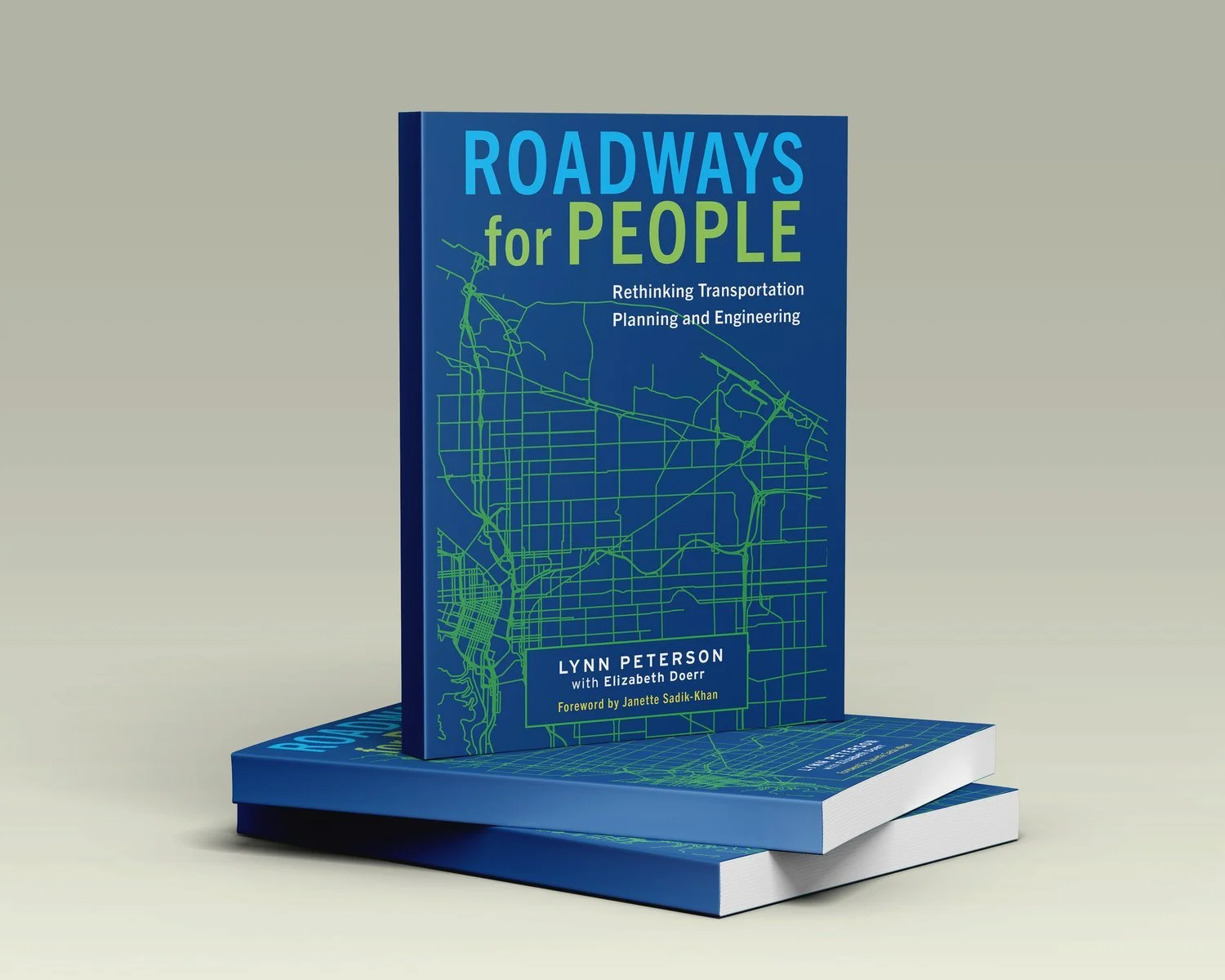
Roadways for People is a roadmap for transportation professionals who want to help make communities more livable, accessible, and just.
Through years of training and education, transportation engineers and planners are experts in their focus areas. Their expertise is essential to creating well-thought-out and safe transportation solutions. But the key to channeling this expertise in the right direction is to listen to the people who travel in and around their communities. People are the experts on their needs, desires, and values. But many of us in the transportation field were not necessarily taught about how to work with the communities we serve or how to collaborate effectively with other professionals in the field. Roadways for People provides a roadmap on how planners and engineers can create transportation solutions for people through a community solutions-based approach that involves racial equity, collaboration, and community engagement at all levels of the work through a community solutions-based approach.